Sleep Myths Debunked: What Science Really Says

We live in a world flooded with sleep advice—some of it helpful, much of it misleading. From popular tips passed down through generations to viral trends on social media, it’s hard to tell fact from fiction. In this article, we debunk some of the most widespread sleep myths, using real science to set the record straight.

person surrounded by floating sleep-related icons like a moon, alarm clock, and question marks, symbolizing common sleep myths

Myth 1: Everyone needs 8 hours of sleep every night

This “8-hour rule” is perhaps the most common belief about sleep. But the truth is, sleep needs vary.

✅ What science says:

Most adults require between 7 to 9 hours of sleep per night. But some people function optimally with slightly less or more. What matters more than hitting a magic number is how refreshed and alert you feel during the day. If you wake up naturally without an alarm and feel focused, your body is likely getting enough rest.

Myth 2: You can "catch up" on lost sleep over the weekend

We’ve all done it—cut corners on sleep during the week, planning to make up for it on Saturday. But can you really repay that “sleep debt”?
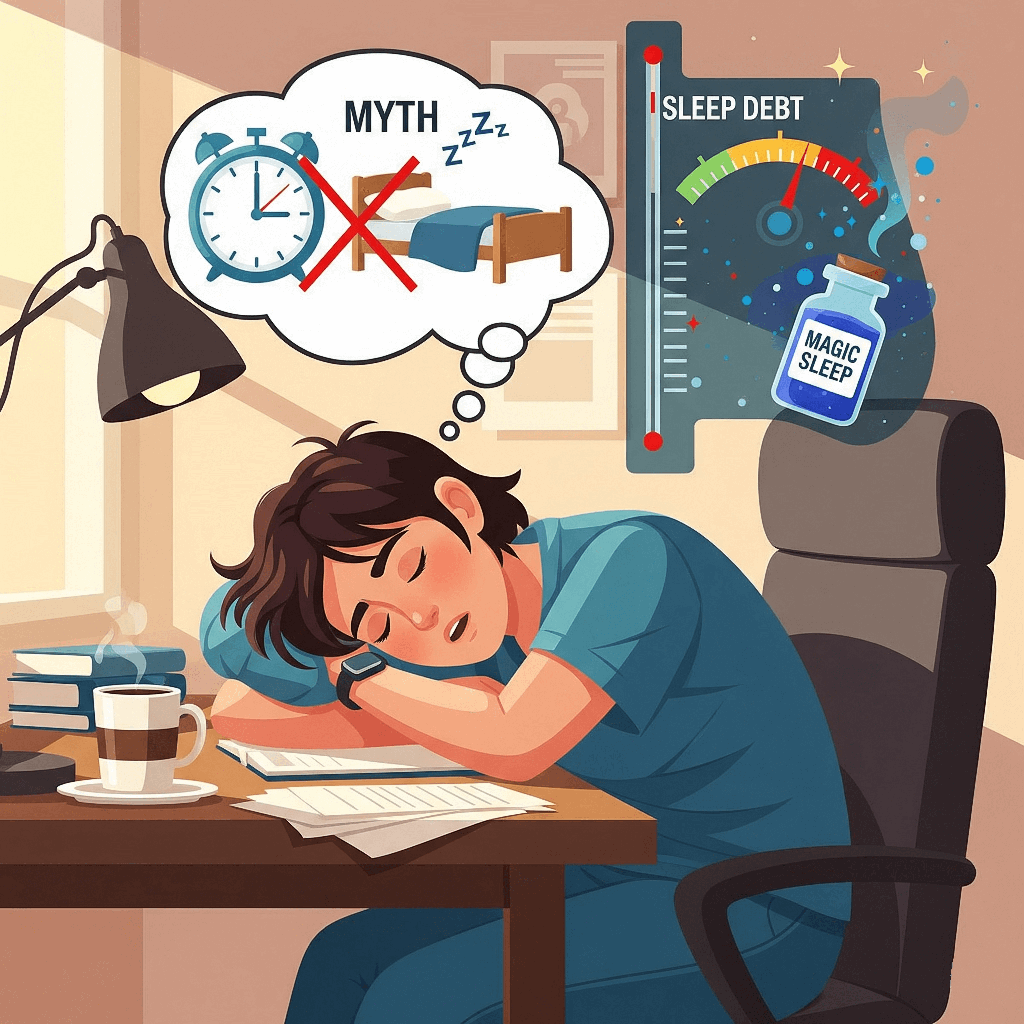
tired person trying to nap on a desk with a clock and calendar above, representing the myth of catching up on sleep.

✅ What science says:

While sleeping in a bit on the weekend can ease mild sleep deprivation, it doesn’t fully restore lost function. Studies show that irregular sleep patterns can disrupt circadian rhythms, impair cognitive performance, and affect mood—even if total hours even out. Consistency matters more than occasional catch-up.

Myth 3: Watching TV or scrolling your phone helps you wind down

It’s tempting to relax with a screen before bed, but your brain might not agree.

✅ What science says:

Screens emit blue light, which suppresses melatonin—the hormone that signals it’s time to sleep. Plus, engaging content (like social media or intense TV shows) can stimulate the brain, delaying sleep onset. If you need help relaxing, try a non-screen ritual: gentle stretches, a warm shower, or reading a physical book.

Myth 4: Drinking alcohol helps you sleep better

A nightcap might make you drowsy, but that doesn’t mean it’s helping your sleep quality.

✅ What science says:

Alcohol can shorten the time it takes to fall asleep, but it disrupts REM sleep—the stage linked to memory consolidation and emotional processing. It also increases nighttime awakenings. If quality sleep is your goal, it’s best to avoid alcohol at least 3 hours before bed.

Myth 5: Older adults need less sleep

Many believe that aging naturally reduces sleep needs—but is this really true?
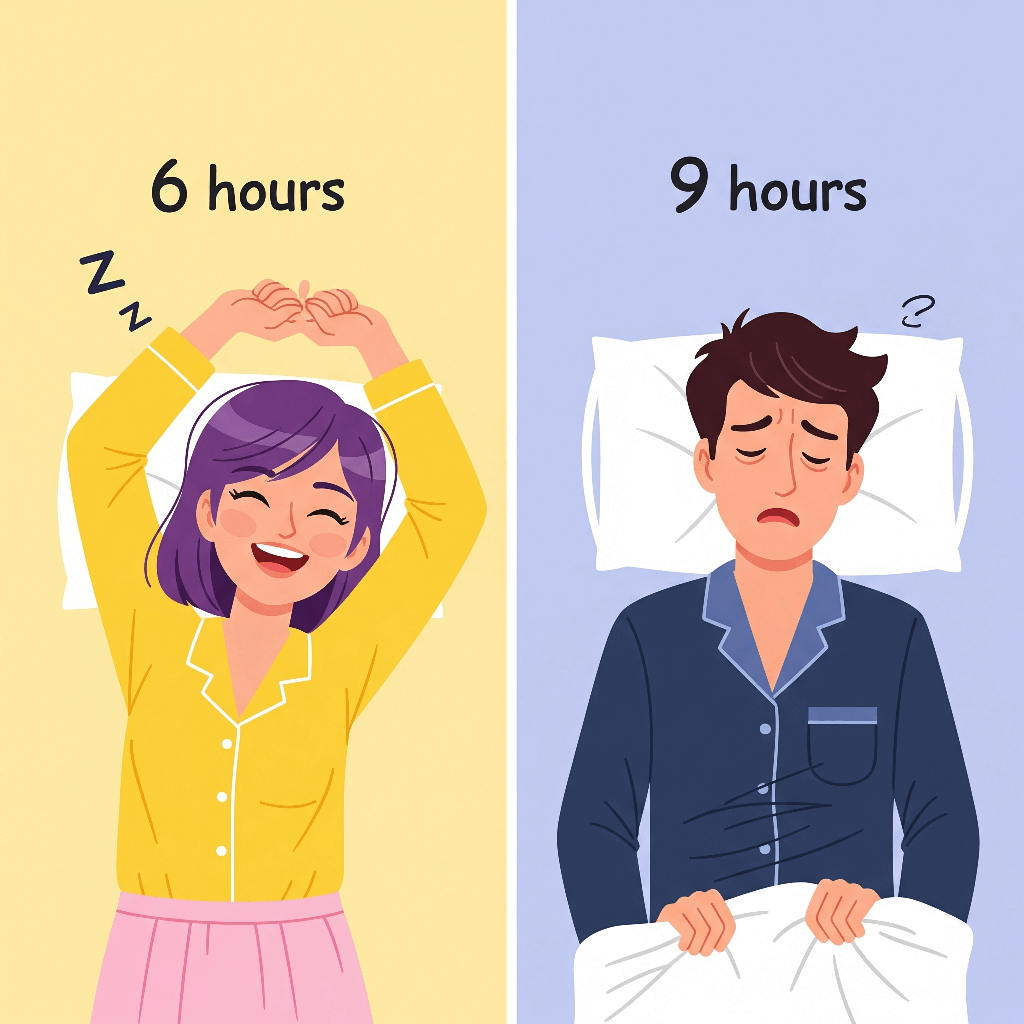
comparing two characters: one energetic with 6 hours of sleep, another tired after 9 hours, representing the myth that everyone needs 8 hours of sleep.

✅ What science says:

While older adults may sleep more lightly or wake up earlier, their sleep need remains similar to that of younger adults. Changes in hormone production, medical conditions, or medication side effects can affect sleep quality. But biologically, the need for 7–9 hours of restorative sleep doesn’t disappear with age.

Myth 6: Snoring is harmless

Snoring is often joked about—but in some cases, it’s a red flag.

✅ What science says:

While occasional snoring can be benign, loud and persistent snoring may signal sleep apnea, a disorder where breathing repeatedly stops during sleep. Sleep apnea can lead to fatigue, heart problems, and cognitive issues. If you snore loudly and feel tired despite a full night in bed, it’s worth speaking with a doctor.

Myth 7: Lying in bed awake helps you fall asleep

Staying in bed and forcing yourself to sleep might seem logical—but it can backfire.

✅ What science says:

If you can’t fall asleep after 20 minutes, experts recommend getting up and doing a calm, low-light activity (like reading or journaling) until you feel drowsy. Associating your bed with frustration or anxiety makes sleep even harder. This approach is based on cognitive behavioral therapy for insomnia (CBT-I).

Takeaway: Evidence Over Assumptions

Sleep is complex, and one-size-fits-all advice rarely works. By separating myths from measurable science, you can build habits that support your body’s true sleep needs—without relying on shortcuts or outdated rules.

Better sleep doesn’t come from viral tips; it comes from knowing your body, respecting your rhythms, and following what’s proven to work.

Leave a Comment