Introduction — quick preview (yes, you can skip ahead, but don’t)
If you’ve been scrolling late at night, you’ve probably seen ads promising a miracle “deep sleep” fix: enter the weighted blanket. Cozy, trendy, sold with soft-focus photos of people blissfully snoozing. But what’s the real story? This piece slices through the marketing-speak and looks at the benefit of weighted blanket from multiple angles: the physiology, the practical wins, the limits, and the folks who should steer clear. Short version: weighted blankets help a lot of people — but they’re not a cure-all. Read on; I’ll keep it honest.
What is a weighted blanket — and why does it feel like a hug?
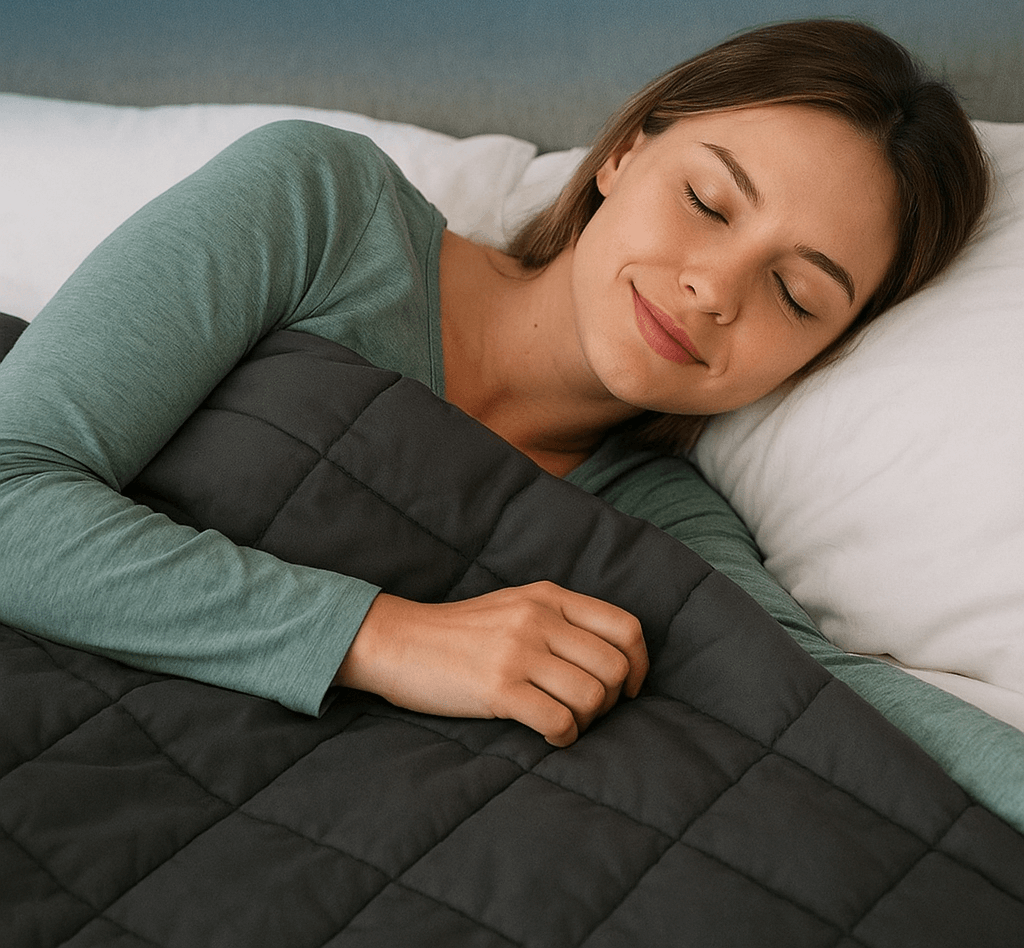
In one sentence: a weighted blanket is a heavier-than-normal cover that applies gentle, even pressure across your body. Makers stuff them with glass beads, plastic pellets, or dense fiberfill, and the pressure they create is often compared to a calm, steady hug.
Why that hug matters: the pressure stimulates what’s commonly called deep pressure stimulation (DPS). Think of DPS as a nudge to your nervous system — it tells your body, “hey, it’s okay, relax.” That nudge can lower heart rate and cortisol (stress hormone) levels, and encourage parasympathetic (rest-and-digest) activity. In plain English: your body chills out.
The main benefits — straight to the point
Here are the most common, evidence-backed benefits people report when they use a weighted blanket:
Faster sleep onset. People often fall asleep quicker, especially if their minds race at night.
Fewer wake-ups. The continuity of sleep improves for many users; fewer rolling-around moments, fewer trips to check the phone.
Reduced anxiety (short-term). For mild-to-moderate anxiety, the calming pressure can lower subjective anxiety scores.
A helpful tool for sensory needs. Individuals on the autism spectrum or with sensory processing differences frequently find weighted blankets grounding.
Non-pharmacological option. Compared to sleeping pills, a blanket comes with far fewer side effects.
Bear in mind: results vary. Some folks notice big changes overnight; others hardly notice anything. That variability matters.
Where the science stands (and where it doesn’t)
There’s legitimate research showing short-term improvements in sleep and anxiety metrics with weighted blanket use. But here’s the rub: many studies are small, short, or dependent on self-reported measures. In other words, the initial evidence is promising, but we don’t yet have a blockbuster, long-term study that nails down exactly who benefits and why.
Translation: if you’re the experimental type, it’s a reasonable, low-risk thing to try. If you’ve got serious heart or respiratory issues, or you’re pregnant, check with a clinician first.
Who’s likely to see the biggest payoff?
Let’s be pragmatic. The people most likely to benefit include:
Those with light-to-moderate insomnia caused by stress or rumination.
People who experience nighttime anxiety or sensory overload.
Adults and children with autism spectrum disorders who respond well to deep pressure.
Anyone preferring a behavioral, non-drug intervention for sleep rituals.
Who might not benefit much: if your sleep issues are mainly driven by sleep apnea, chronic pain, or certain medical conditions, a weighted blanket may not move the needle much.
Safety first — and common-sense rules
This is non-negotiable: weighted blankets aren’t for everyone.
Weight guideline: a common rule of thumb is roughly 7–10% of body weight. Too light — no effect. Too heavy — uncomfortable or unsafe.
Children & infants: do not use heavy blankets with infants or toddlers. For kids, follow pediatric guidance and never leave them unsupervised with a very heavy cover.
Medical cautions: if you have COPD, severe asthma, heart disease, or circulation issues, consult your doctor before trying one.
Comfort > trendiness: if it feels restrictive or you have trouble breathing, stop immediately.
Practical buying & usage tips (my reporter’s recommendations)
Try before you commit. If possible, buy from a retailer with a trial or good return policy.
Pick the right fabric. If you sleep hot, look for breathable cotton, bamboo, or cooling options.
Use it as part of a ritual. Pair it with a short wind-down routine: dim lights, two-minute breathing exercise, and then the blanket. Conditioned relaxation is real.
Care for it properly. Check washing instructions — many need removable covers or spot-cleaning.
Real-world downsides (let’s not sugarcoat it)
Not a universal fix. Some people toss and turn just the same.
It can be heavy to handle. Changing sheets becomes a minor wrestling match.
Potential for psychological reliance. You might find you psychologically depend on it as a sleep cue — not dangerous, but worth noting if you like to travel light.
Cost. Decent weighted blankets aren’t cheap. Expect to pay more for quality materials and construction.
Quick how-to: integrating a weighted blanket into your sleep routine
Choose the right weight (≈ 7–10% body weight).
Start with short sessions — maybe 20–30 minutes while reading or doing breathing exercises.
Use it consistently at night for at least 2–4 weeks to see if it makes a difference.
Keep a sleep log: note time to fall asleep, wake-ups, and perceived sleep quality.
Frequently Asked Questions (FAQ)
Q1: How heavy should a weighted blanket be?
A: The common recommendation is about 7–10% of your body weight. So if you weigh 70 kg (154 lbs), a blanket between ~5–7 kg (11–15 lbs) is a typical starting point. Adjust based on comfort — start lighter if you’re unsure.
Q2: Will a weighted blanket help with severe insomnia?
A: Probably not by itself. Weighted blankets can help with mild-to-moderate insomnia, especially when anxiety is involved. Severe or chronic insomnia usually needs a multi-pronged approach, including CBT-I, sleep hygiene changes, and possibly medical guidance.
Q3: Can children use weighted blankets?
A: Some older kids use them successfully, particularly those with sensory needs. Infants and very young children should NOT use heavy blankets. Follow pediatric recommendations and pick a lighter-weight, child-specific option with supervision.
Q4: Do weighted blankets make you hot?
A: They can, depending on materials and your natural tendency to sleep hot. Look for breathable fabrics or cooling-fill options if this’s a concern.
Final thoughts — honest, practical, and a little hopeful
The benefit of weighted blanket is real for many people: faster sleep onset, fewer awakenings, and a calmer mind without prescription meds. But it’s no silver bullet — it’s a tool, not a miracle. Use it smartly: the right weight, proper safety checks, and sensible expectations. If you treat it as part of a broader sleep-care routine — not as the entire routine — you’re more likely to find genuine, lasting improvement.
If you’re on the fence: try the lighter weight first, use a trial if available, and give it a couple of weeks before deciding. And if you’ve got a tricky medical history, ask a clinician. That’s about as unglamorous and as helpful as I can be.
Want me to recommend a specific weight and fabric based on your body weight, typical room temperature, and whether you sleep hot? Tell me those three things and I’ll give you a direct pick. No fluff — just the heavy hug that fits.